
Fenner leads industry-first conveyor belt recycling initiative
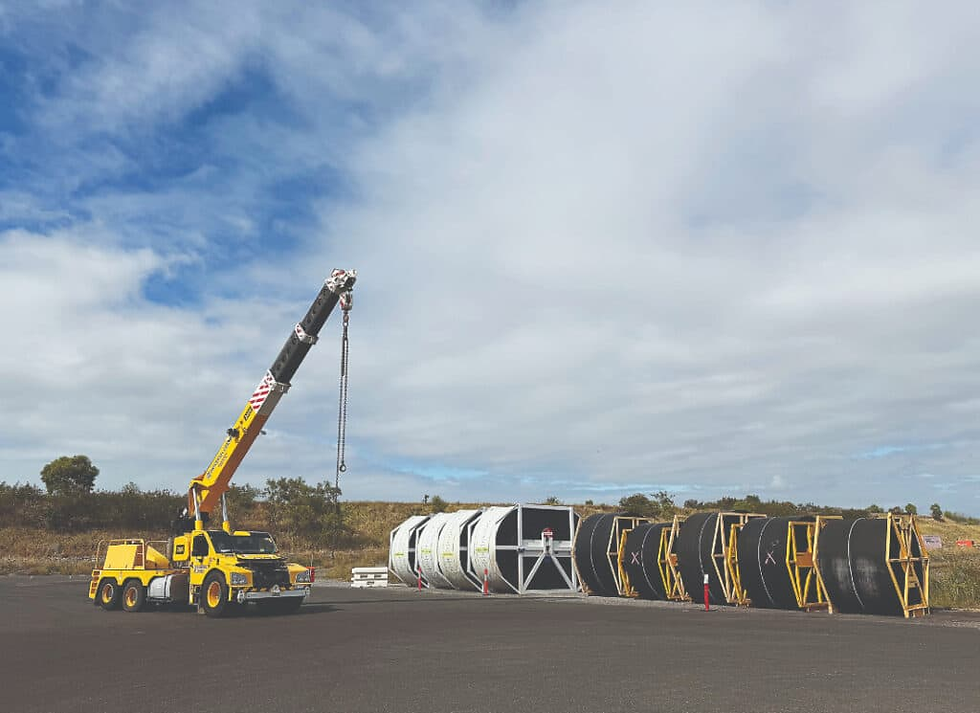
Fenner Conveyors has partnered with Tyrecycle to deliver a port-first conveyor belt recycling initiative.
At Gladstone Ports Corporation (GPC), conveyor belts are central to keeping operations and material moving. One consistent and significant challenge, however, has been finding a new destination for them once they are decommissioned.
With 65 conveyor systems, representing more than 48km of installed belting, Queensland’s largest multi-commodity port and major global coal export terminal has long sought a recycling pathway to iron out that hurdle.
However, that solution wasn’t available until recently.
As part of a strategic partnership, Fenner Conveyors has come together with Australian recycling company Tyrecycle to give decommissioned conveyor belts a second life rather than sending them to landfill.
GPC is among the first to trial this approach, with six of its conveyor belts, weighing 122 tonnes, recently transported to Tyrecycle’s Brisbane facility to be converted into new rubber products for civil applications, playgrounds and various industrial uses.
According to GPC, this marks a significant step towards improved sustainability and circular economy practices across its operations.
“Our teams have been working through options for some time, so to have a genuine, data-backed recycling solution is a great step forward,” a GPC spokesperson said.
Independent analysis commissioned by Tyrecycle estimated the recycling of these belts will save more than 190 tonnes of carbon dioxide (CO2) equivalent, helping facilities like GPC and other mining companies reduce the environmental impact associated with end-of-life assets.
Fenner Conveyors sales and marketing executive general manager Trevor Svenson said the project highlighted how the industry could turn conveyor belt waste into a local circular economy opportunity.
“Every organisation that begins recycling its belts is contributing to a growing circular economy, supporting local manufacturing, creating jobs and reducing waste,” Svenson said.
“GPC’s involvement is an important step in proving this model can work at scale for major industrial sites, and we are proud to have helped deliver a solution that is practical, efficient and genuinely circular.”
As part of the initiative, the embedded steel from GPC’s decommissioned belts will also be recovered for recycling, not only diverting this material from landfill but also helping pave the way for a one-in, one-out operating model.
Tyrecycle head of trading, mining and strategic development Ashley Battilana said this would reduce the number of decommissioned belts sitting idle at GPC.
“Moving forward, hopefully we can help facilities like GPC reach this model, so they don’t have to stockpile old conveyor belts that get in the way of their operations,” Battilana said.
“Instead, a new belt will get delivered and the old belt taken away. This logistics model will remove double handling, reduce supply chain costs and enable recycling to be completed in Australia within three days of the belt being removed from service.”
Both Fenner and Tyrecycle hope that their partnership can help create a circular economy model where new conveyor belts are manufactured with the recycled material of their predecessors.
This vision may not be as far-fetched as first thought, as recovered material from GPC’s recycled belts will support the manufacture of Fenner’s InfinitySeries conveyor belting, which incorporates recycled rubber materials from reclaimed conveyor belts, into new belt construction.
Manufactured locally, the InfinitySeries has undergone rigorous testing and quality assurance to ensure it delivers the performance required for the harsh demands of mining and industrial environments across the country.
In recognition of its recycling efforts, Fenner’s InfinitySeries was nominated as a finalist for the 2026 Australian Bulk Handling Awards and the 2026 Australian Mining Prospect Awards in their respective sustainability categories.
“Fenner Conveyors remains committed to expanding belt recycling efforts nationwide,” Svenson said.


Comments